Home · Does a fig need a wasp?
The signature desk
Does a fig need a wasp?
It is a fair question, and it does not have one official answer. Kew, the Royal Horticultural Society, and two University of California sources are all talking about Ficus carica. They are not all talking about the same gardening job.
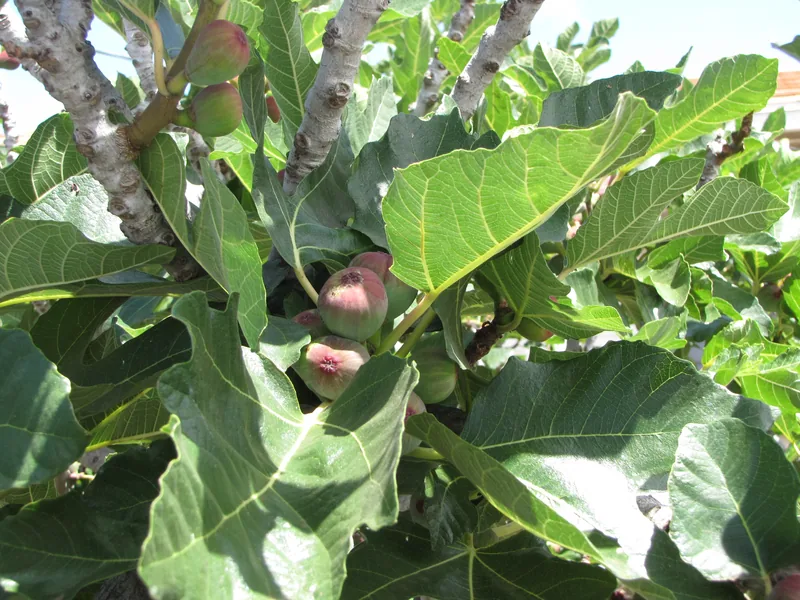
Start with the flower, because that is where Kew begins. The flowers are “very small and contained in a hollow fleshy receptacle that resembles an unripe fig called the synconium.” “The synconium has a small opening at the apex that allows a fig wasp (Blastophaga psenes) to enter and pollinate the flowers within.” [source] In Forest and Kim Starr’s Wailuku photograph you can actually see that small apical opening on more than one fig. The photograph is of fruit and leaves in Maui, in 2009. It is not a photograph of the wasp itself, and this site does not pretend otherwise.
Does a fig need a wasp?
Four official answers, kept side by side. They are not blended into one rule for every fig in the world.
Kew’s edible fig
On Kew’s page, captured on 16 November 2026, the flowers “are very small and contained in a hollow fleshy receptacle that resembles an unripe fig called the synconium.” “The synconium has a small opening at the apex that allows a fig wasp (Blastophaga psenes) to enter and pollinate the flowers within.” “The edible fruit consists of the mature syconium containing numerous one-seeded fruits.” The same official page uses both spellings, synconium and syconium. [source]
A UK garden fig
The Royal Horticultural Society’s grow-your-own page, re-opened on 18 November 2026, says the seedless fruits “develop without fertilisation (parthenocarpic fruit), so pollination” is not needed for the figs it is describing. ‘Brown Turkey’ is “the best known and most widely available,” and it has an Award of Garden Merit. The page does not mention a fig wasp. [source]
Four horticultural types
UC Master Gardeners of San Luis Obispo County classify “hundreds of fig varieties” into four types: Caprifig, Smyrna, San Pedro and Common. “Smyrna and San Pedro types require pollination to produce edible fruits; Caprifig type is solely used as a pollinator tree. Common type does not require pollination.” The wasp named there is Blastophaga, living part of its life in a caprifig and carrying pollen to other fig trees. Common type varieties listed for that county include Brown Turkey. [source]
Current California orchards
A 2026 UCCE talk by Phoebe Gordon, read from a copy saved on 16 November 2026, sets out the same four types, including Smyrna, which “Requires pollination to set any fruit.” Later in the same talk comes the sentence “Wasp pollination is obsolete in California production systems.” That official sentence is a note about current orchards. It is not treated here as a claim that Smyrna-type figs no longer need pollination. [UCCE 2026]
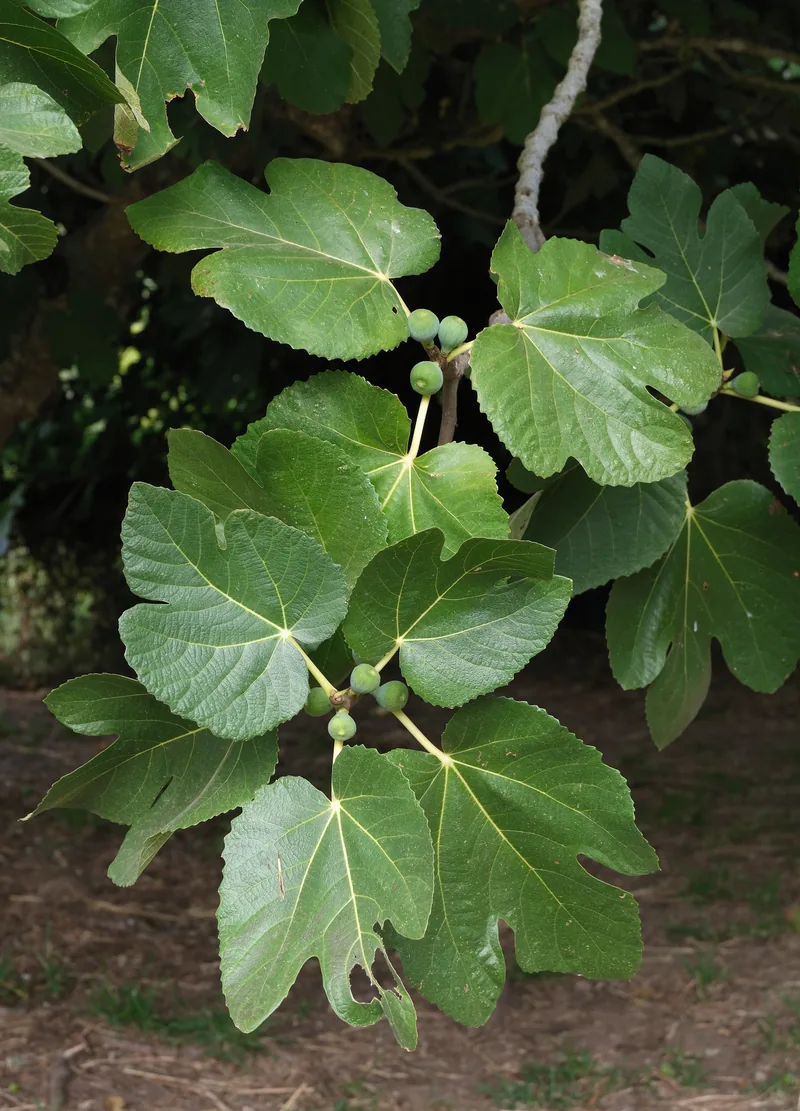
Now stand in a UK garden. The RHS grow-your-own page, re-opened on 18 November 2026, is writing for people who plant a fig against a warm wall or keep one in a pot. Its official sentence is that the seedless fruits “develop without fertilisation (parthenocarpic fruit), so pollination” is not needed. [source] ‘Brown Turkey’ is “the best known and most widely available,” and it has an Award of Garden Merit. [source] The page never names Blastophaga psenes. That is not a slight on Kew. It is a different official job: how a UK garden fig actually sets fruit.
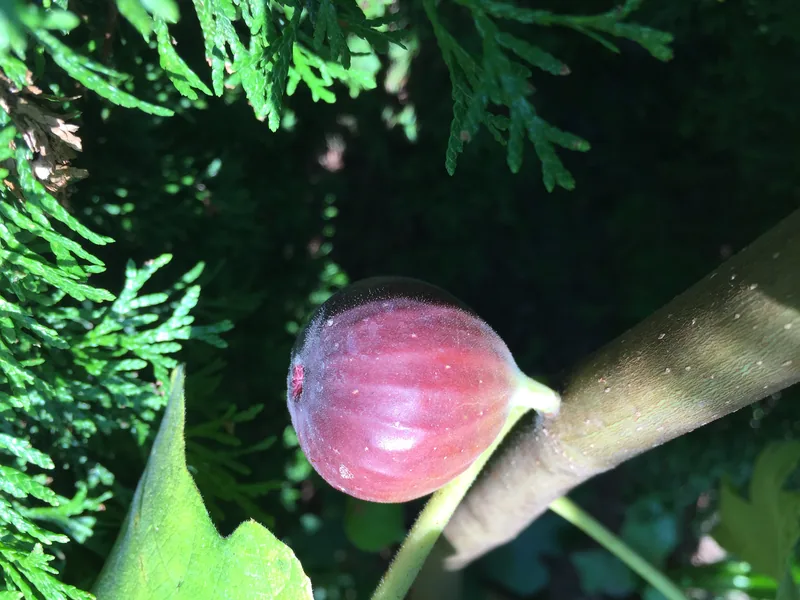
California’s official list is more finely cut. UC Master Gardeners of San Luis Obispo County say Common types do not require pollination, and they include Brown Turkey on the Common list for that county. Smyrna types “require pollination to produce edible fruits,” and they have no breba crop. San Pedro types need pollination for the main crop, though a breba, if there is one, does not. A caprifig is a pollinator tree, and a fig wasp (Blastophaga) “lives part of its life cycle in a caprifig and carries the pollen to other fig trees.” [source] Famartin’s Virginia photograph is officially titled a Chicago Hardy Fig. That cultivar name is the file title. It is not taken from the San Luis Obispo Common-type list, and this desk does not move it there.
Then comes a later official sentence that needs a careful frame. Phoebe Gordon’s 2026 UCCE talk still lists Smyrna as a type that “requires pollination to set any fruit.” Later, the same talk says “Wasp pollination is obsolete in California production systems,” and it gives reasons: Calimyrna “doesn’t yield as well as other cultivars,” and the wasp “introduces endosepsis into fruit.” [UCCE 2026] This desk quotes that as a note about current orchards. It does not treat it as a claim that Smyrna-type figs, as a type, no longer need pollination. The four official answers stay on the buttons above, and they stay unblended.
Enjoyed this desk of official figs, wasps, and four horticultural types?
No pop-ups. No intrusive advertising. Just interesting stuff. A little support helps the next fruits.im site get built.