Home · History
Official timescales, kept apart
A very old cultivated fruit, and three official ways to say how old
Kew, a University of California Master Gardener page, and a 2026 UCCE talk all give the fig a long human history. They do not use the same official clock, and this desk does not wind them into one.
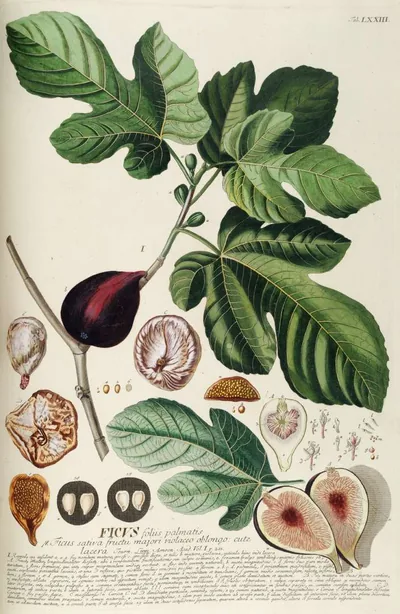
Kew’s lead sentence is the one most visitors remember, and it is kept here in full. “Over 11,000 years ago, the fig became what was probably the first cultivated fruit in human history.” Today “more than 1.3 million tonnes of figs are produced worldwide, mostly coming from the ancestral home of the fruit: the Middle East.” [source] “Fig plants were first introduced to Britain during the Roman era, and still grow as ornamentals in parks and gardens across the country.” [source] That Roman introduction is the official British arrival on Kew’s page. It is not a modern-nursery story.
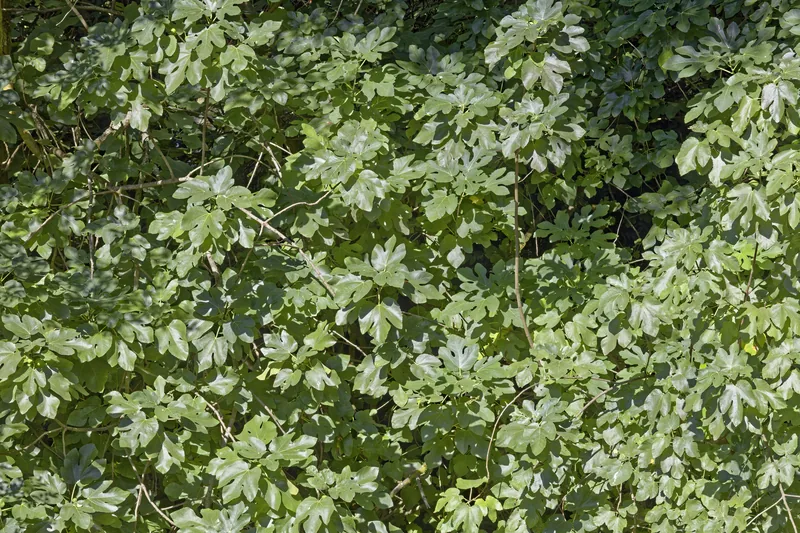
UC Master Gardeners of San Luis Obispo County write that figs are “native to Western Asia and the eastern Mediterranean region,” “cultivated for thousands of years,” and “were first planted in California at the San Diego Mission in 1769.” [source] Kew’s own native list is longer and more particular: Afghanistan, Cyprus, Greece, Iran, Iraq, Kriti, Lebanon-Syria, North Caucasus, Pakistan, Palestine, Tadzhikistan, Transcaucasus, Turkey, Turkmenistan and West Himalaya, with Great Britain among the introduced places. [source] The two official geographies are close, and they are not identical, so both are left standing.
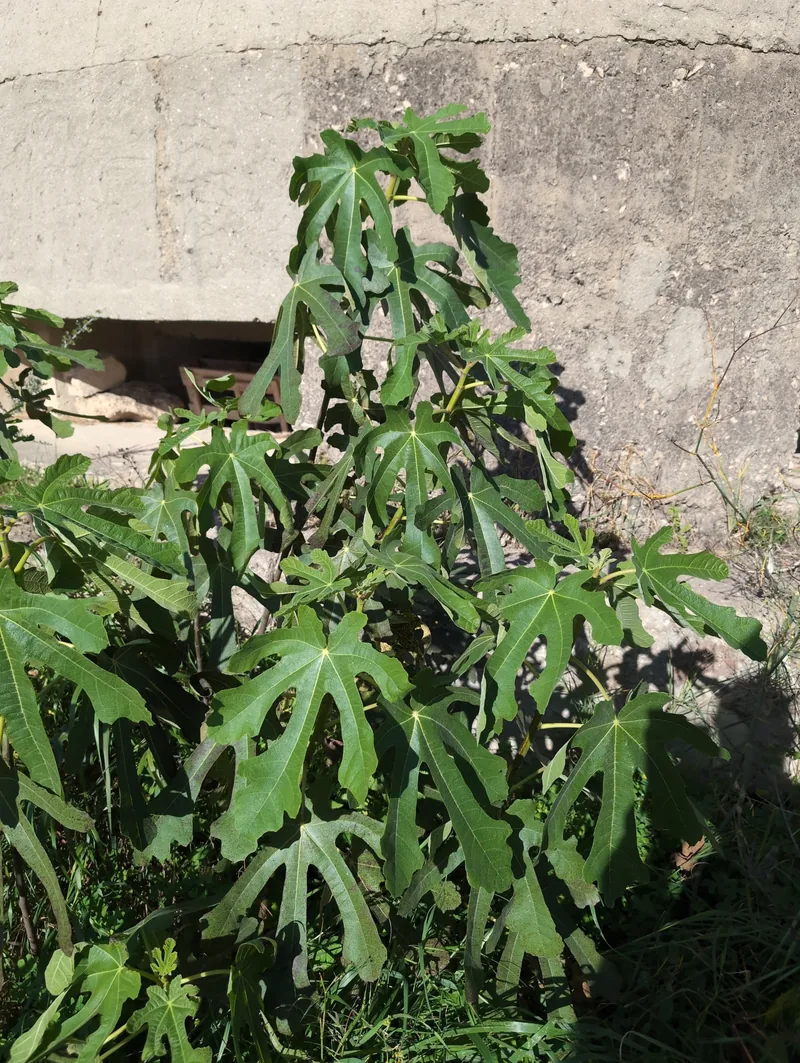
Phoebe Gordon’s 2026 UCCE talk says the species “has been domesticated since the bronze age,” is “extremely easy to propagate,” “roots readily from cuttings,” and “can be consumed fresh and stored in dried form.” Domestication, in that official list, brought “increased fruit size,” “the development of ‘artificial’ pollination,” and “selection of cultivars that exhibit fruit persistence.” [UCCE 2026] The talk also has a local history: figs are “a traditional crop for the Fresno-Madera-Merced area,” and “Fresno was founded on fig production as well as raisins.” Acreage “has shrunk due to competition and changing tastes.” Traditional production “has focused on dried and canned fruit,” with Calimyrna (Sarilop) “the traditional dried variety” and Kadota (Datatto) “the canned variety.” [UCCE 2026]
Georg Dionysius Ehret’s 1771 plate, published in Christoph Jacob Trew’s Plantae selectae, is older than any of those California dates, and much younger than Kew’s 11,000 years. It is a botanical portrait, not a photograph of a living tree at Kew, and the file is only 704 pixels wide, so this site uses a small still. Public domain plates of this kind are easy to over-read. The official modern wording still lives on the Kew, RHS and UC pages, and the plate is here as a picture of how Ficus carica was already being looked at carefully in the eighteenth century.
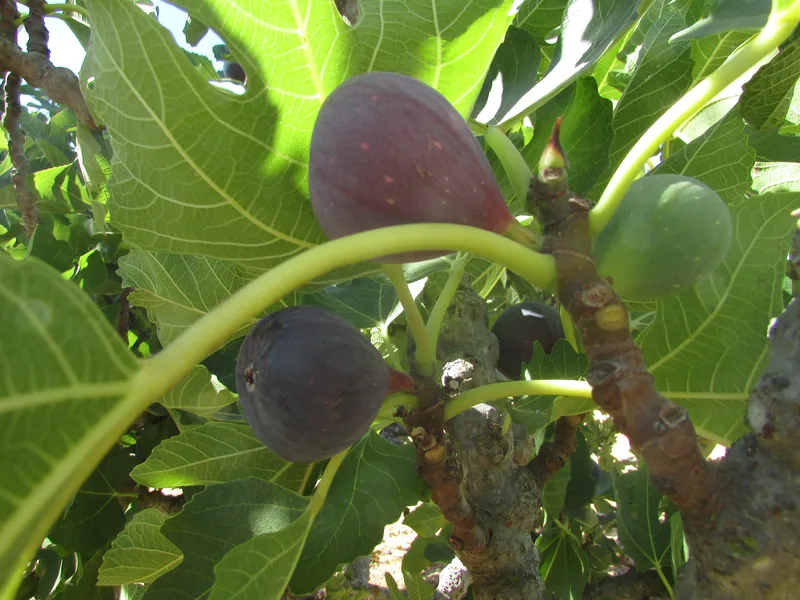
Enjoyed this desk of official figs, wasps, and four horticultural types?
No pop-ups. No intrusive advertising. Just interesting stuff. A little support helps the next fruits.im site get built.