A fruit that is also a little garden of flowers
Does a fig need a wasp? It depends whose official page you are reading
Kew describes a fig wasp walking in through a tiny opening at the apex. The Royal Horticultural Society describes seedless UK garden figs that need no pollination at all. A University of California list then splits the difference into four horticultural types. This desk keeps those official answers side by side.
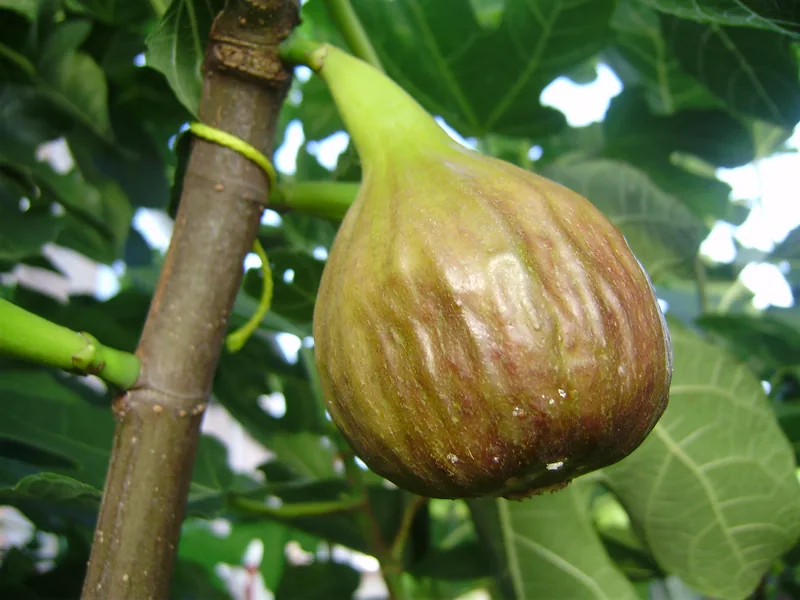
A ripe fig, hanging among those deeply lobed leaves, looks like one fruit. Open it, and the story changes. Kew’s page, as captured on 16 November 2026, says the flowers “are very small and contained in a hollow fleshy receptacle that resembles an unripe fig called the synconium.” “The edible fruit consists of the mature syconium containing numerous one-seeded fruits.” [source] The same official page uses both spellings, and this site does not pick a favourite. You can see that packed interior in Ivar Leidus’s halved fig, grown in Brazil, on the inside page.
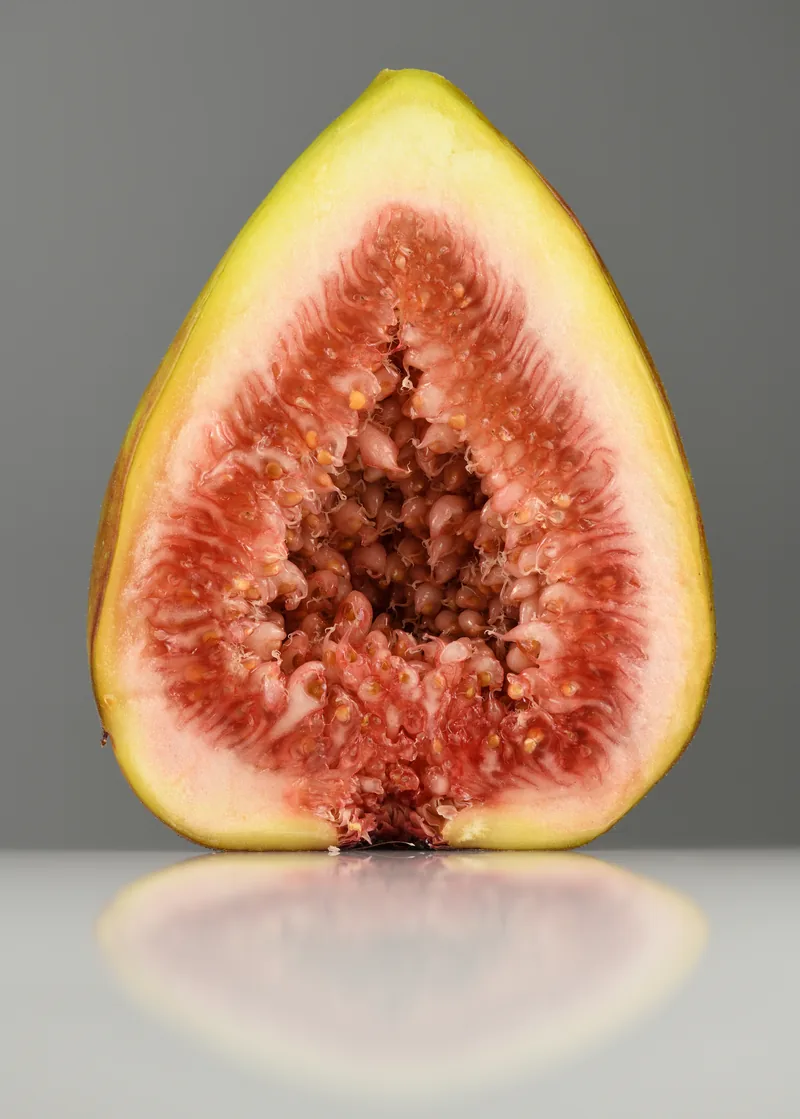
Does that hollow receptacle need a wasp? Kew is unambiguous about the flower: a fig wasp, Blastophaga psenes, “enter[s] and pollinate[s] the flowers within” through “a small opening at the apex.” [source] Stand in a UK garden, though, and the Royal Horticultural Society has a different official sentence. The seedless fruits “develop without fertilisation (parthenocarpic fruit), so pollination” is not needed for the figs that page is describing. ‘Brown Turkey’, it adds, is the best-known variety for the UK, and it holds an Award of Garden Merit. [source] Those two official pictures are the reason the signature desk lives at Does a fig need a wasp?.
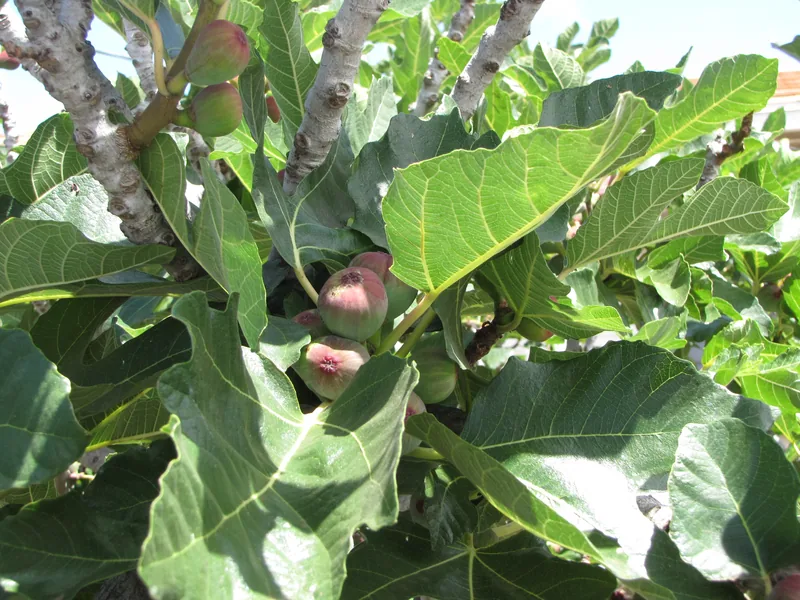
A third official picture sits in California. UC Master Gardeners of San Luis Obispo County classify “hundreds of fig varieties” into four types: Caprifig, Smyrna, San Pedro and Common. Common types do not require pollination. Smyrna types do, and they have no breba crop. San Pedro types may have a breba that needs no pollination, then a main crop that does. A caprifig is for pollination only, and its own figs are “small, dry, nonedible fruit.” [source] The four types page keeps that list intact, including Brown Turkey among the Common types for that county.
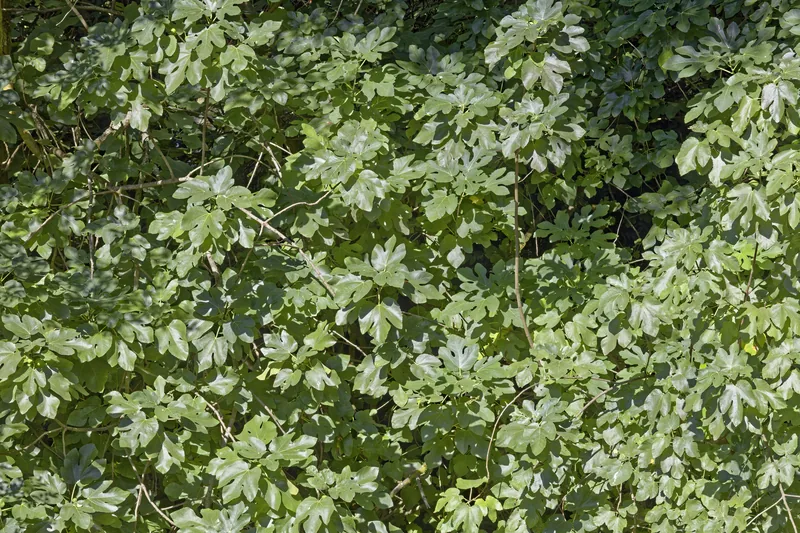
Kew also gives the fig a very long human story. “Over 11,000 years ago, the fig became what was probably the first cultivated fruit in human history.” More than 1.3 million tonnes are produced worldwide, “mostly coming from the ancestral home of the fruit: the Middle East.” Fig plants “were first introduced to Britain during the Roman era, and still grow as ornamentals in parks and gardens across the country.” [source] A 2026 UCCE talk by Phoebe Gordon, read from a saved copy, says the species “has been domesticated since the bronze age.” [UCCE 2026] Those two official timescales are neighbours, and they are not blended. The history page holds them both, beside the San Diego Mission date from the San Luis Obispo page: 1769. [source]
If you have come here from the fruits hub, you will also find a calm UK garden page from the RHS, a careful note about sap and sunlight, a quiz on official wording, and three typographic fact sheets with no photographs inside.
Enjoyed this desk of official figs, wasps, and four horticultural types?
No pop-ups. No intrusive advertising. Just interesting stuff. A little support helps the next fruits.im site get built.