Home · Sap and leaves
An official caution, not a medical guide
Sap, sunlight, and those rough, lobed leaves
Kew has a short, careful sentence about fig sap. This page repeats it, and then stops short of advice that would turn a botanical desk into a clinic.
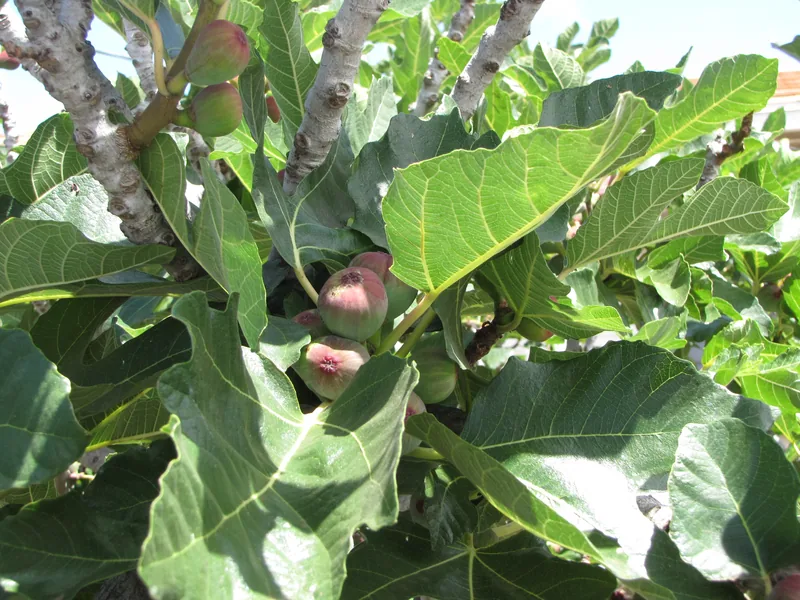
“The sap of the fig plant can cause a skin inflammation if exposed to sunlight in a phenomenon called phytophotodermatitis.” [source] That is the official wording captured from Kew on 16 November 2026. This site does not add home remedies, severity scales, or a list of what you should do next. If sap and sunlight have already met your skin, that is a question for a qualified person, not for a typographic fruit desk.
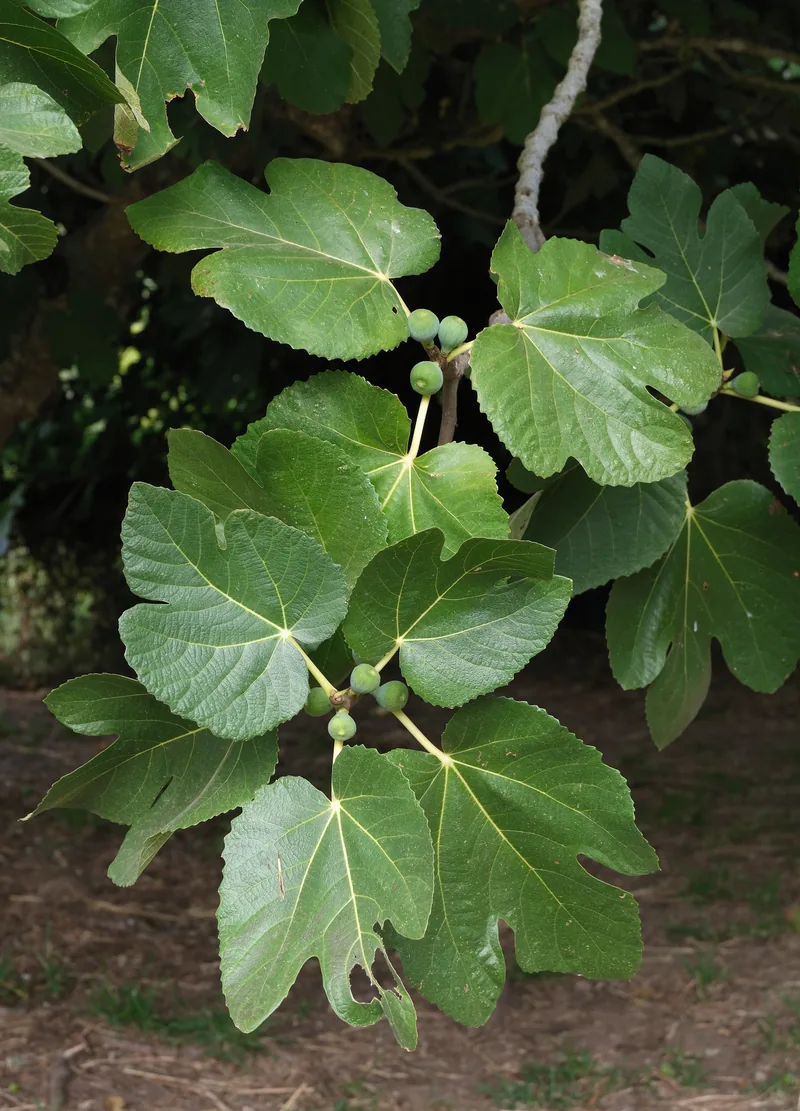
The leaf itself is easier to enjoy at a little distance, and Kew gives it measurements you can almost test with a hand-span. “Fig leaves are around 20 cm long and 14 cm wide, with 3 to 5 deep lobes and rough to the touch.” [source] Forest and Kim Starr’s Maui stills, and Alvesgaspar’s later photograph of leaves with immature fruits, are here so you can see those lobes. They are not here as a promise that every leaf in every garden will match the official 20 by 14 centimetres exactly.
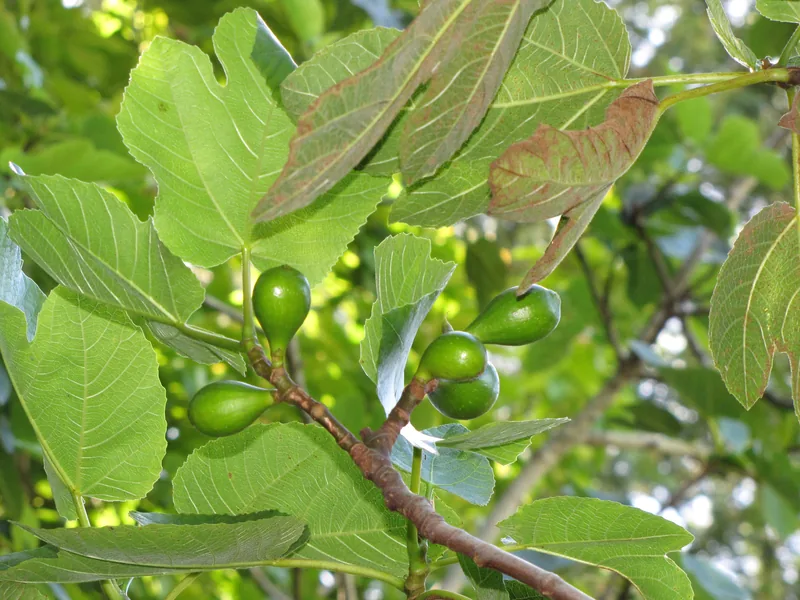
Gordon’s 2026 talk notes, among family traits, the “production of latex.” [UCCE 2026] That official family remark sits beside Kew’s phytophotodermatitis sentence. It is not treated as a second, fuller medical account. On the San Luis Obispo page, the practical plant warnings are horticultural ones: figs “will drop their leaves if kept too dry,” and “excess nitrogen promotes excess leaf growth and causes delayed ripening and poor fruit quality.” [source] Those are growing notes. They are not a substitute for Kew’s sap caution, and they are not blended with it.
Enjoyed this desk of official figs, wasps, and four horticultural types?
No pop-ups. No intrusive advertising. Just interesting stuff. A little support helps the next fruits.im site get built.