Home · Four types
A California horticultural list
Four horticultural types, and a UK garden that usually needs none of the wasp work
University of California sources set out four types of edible fig. The Royal Horticultural Society, writing for a UK garden, describes parthenocarpic fruit and does not need that four-part list to tell you how ‘Brown Turkey’ sets its figs.
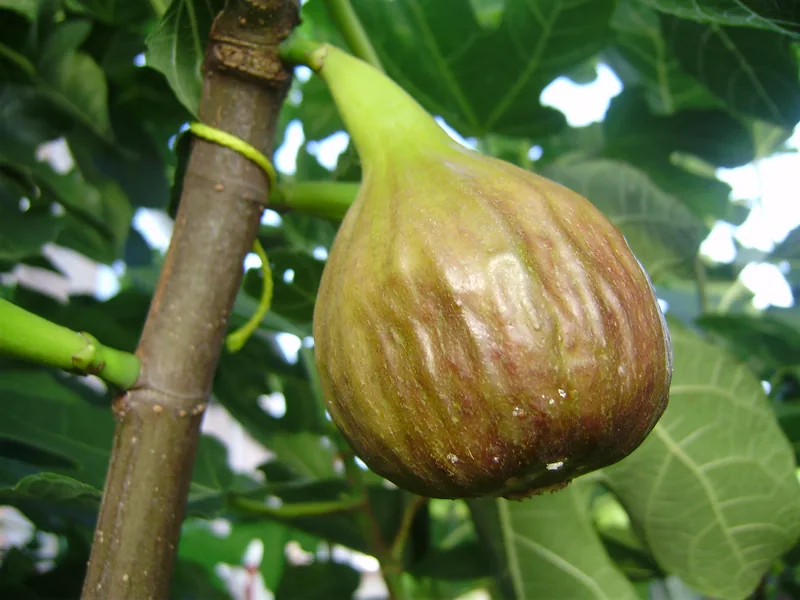
UC Master Gardeners of San Luis Obispo County begin with a generous official number: “There are hundreds of fig varieties which are classified into four types: Caprifig, Smyrna, San Pedro and Common.” Then the rules, kept here in their official wording. “Smyrna and San Pedro types require pollination to produce edible fruits; Caprifig type is solely used as a pollinator tree. Common type does not require pollination.” [source] Home gardeners, the same page says, “typically grow the common type of fig tree, the type most commercially available.” [source]
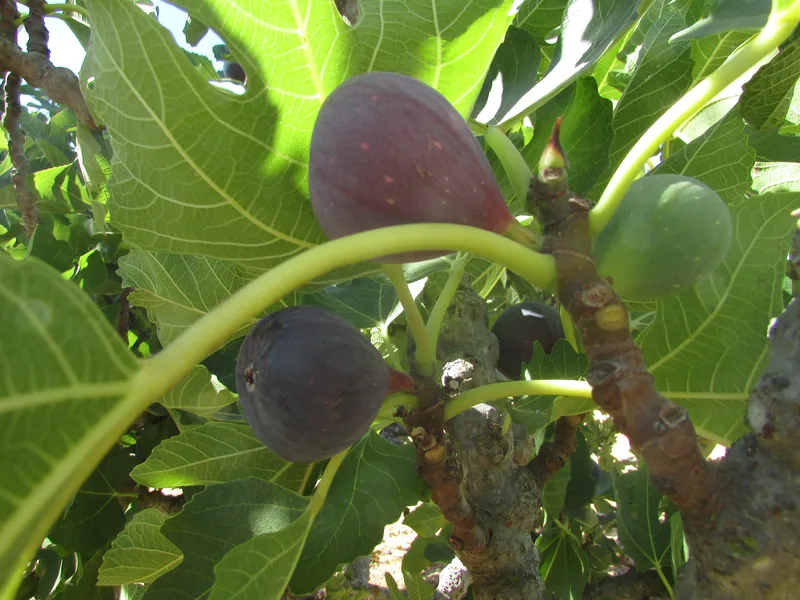
A caprifig, on that list, is “for pollination only.” “Figs from caprifigs are small, dry, nonedible fruit.” A fig wasp (Blastophaga) “lives part of its life cycle in a caprifig and carries the pollen to other fig trees.” Commercial growers “plant caprifigs in their orchards to promote pollination.” [source] Phoebe Gordon’s 2026 UCCE talk is even blunter about the caprifig itself: “Mostly inedible. Functionally male, and where the fig wasp completes its life cycle.” Caprifigs, in that talk, “have three crops, which allow multiple generations of fig wasps,” and “the second crop of the caprifig (profichi) coincides with when the main crop needs to be pollinated.” [UCCE 2026]
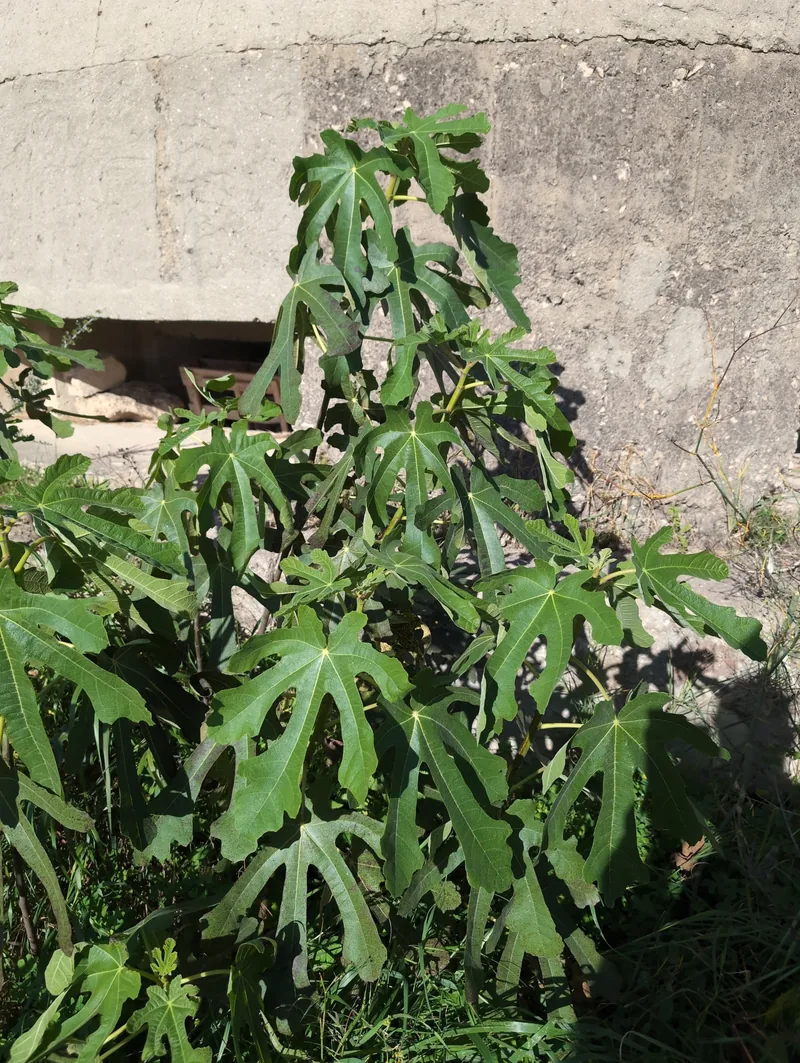
Smyrna types, on the San Luis Obispo page, “require pollination, no breba crop,” and are “considered among the best for eating and drying.” “The cultivar most commonly grown here is Calimyrna.” [source] Gordon’s wording is the same idea in a tighter official line: Smyrna “requires pollination to set any fruit; bears no breba/first crop.” [UCCE 2026] San Pedro types “require pollination for main crop” and “may have a breba crop which does not require pollination.” Cultivars named for California are King (Desert King), Lampeira, and San Pedro. [source] Gordon again agrees on the mechanism: San Pedro “does not require pollination for the breba, requires pollination for the main crop.” [UCCE 2026]
Common types, sometimes called Persistent in Gordon’s list, “do not require pollination for either crop,” though they “do not always produce breba.” [UCCE 2026] The San Luis Obispo page says a Common type is the one “most common type found in the home garden,” and it may have a breba “depending on the cultivar.” The Common varieties listed for that county are Adriatic, Black Mission, Brown Turkey, Celeste, Flanders, Italian Everbearing, Osborn’s Prolific, Violette de Bordeaux and White Genoa. [source] Brown Turkey, in other words, sits on a California Common list and on an RHS Award of Garden Merit list at the same time. The RHS still does not need the four-type table to say that UK garden figs, on its page, are parthenocarpic. [source] Both official worlds are kept.
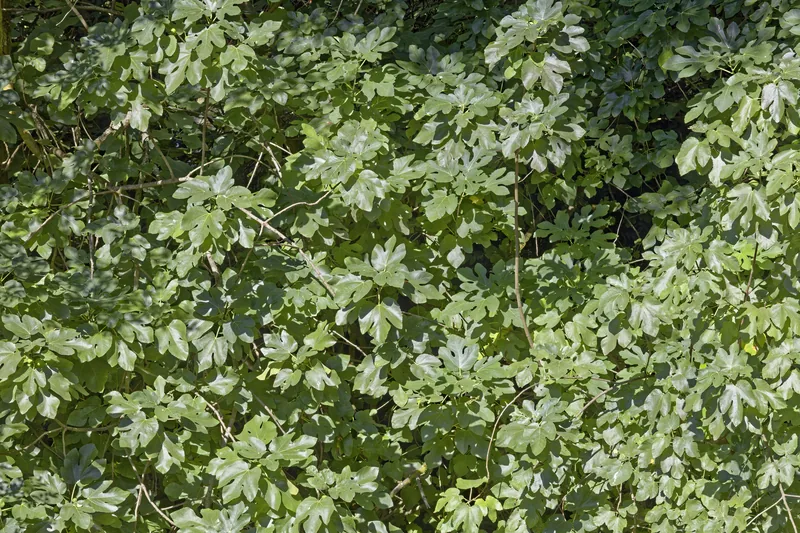
There is also the 2026 orchard sentence, which must not be allowed to wash back over the type list. “Wasp pollination is obsolete in California production systems.” [UCCE 2026] That official remark is about current production, and about problems the talk itself names: yield in Calimyrna, and endosepsis once carried by the wasp. It is not used here to cancel the official definition of a Smyrna type. If you came to this page from a UK garden, the growing page stays with the RHS. If you came from the wasp question, the desk is still the place where all four official answers sit on buttons.
Enjoyed this desk of official figs, wasps, and four horticultural types?
No pop-ups. No intrusive advertising. Just interesting stuff. A little support helps the next fruits.im site get built.