Home · A UK garden
From the Royal Horticultural Society
A fig in a UK garden: two crops, and usually one that ripens
The RHS grow-your-own page, re-opened on 18 November 2026, is a practical official voice for a cool climate. It is not a California orchard manual, and this desk does not turn it into one.
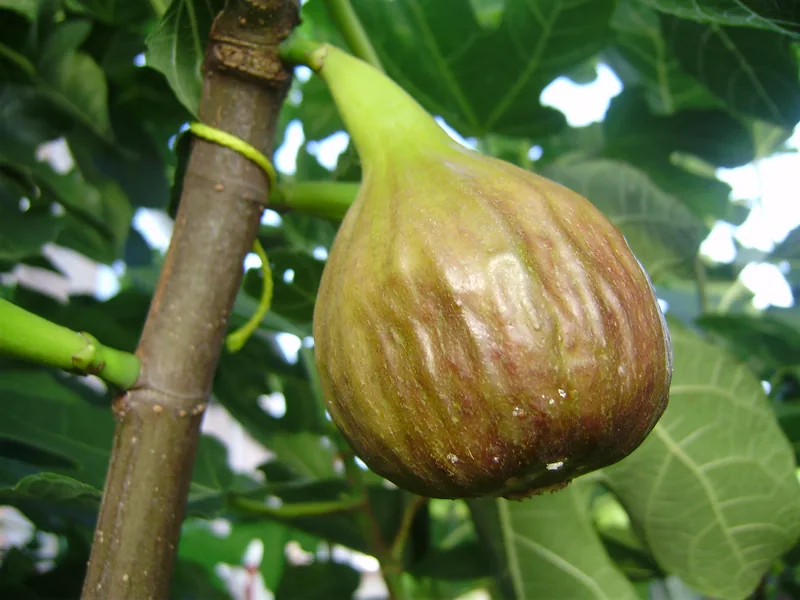
“Figs need a warm, sunny, sheltered spot to crop well.” Spring “is the ideal time to plant, so they have a full growing season.” They are “sold as young potted plants in spring and summer,” in garden centres, or, for a wider choice, from specialist fruit nurseries. [source] “Keeping them in a pot is also useful in cooler regions, so they can be moved indoors over winter.” [source]
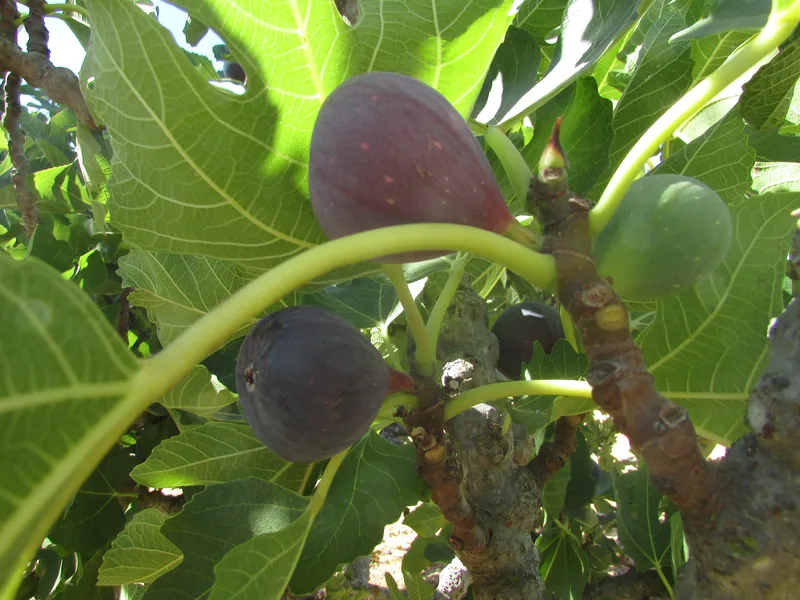
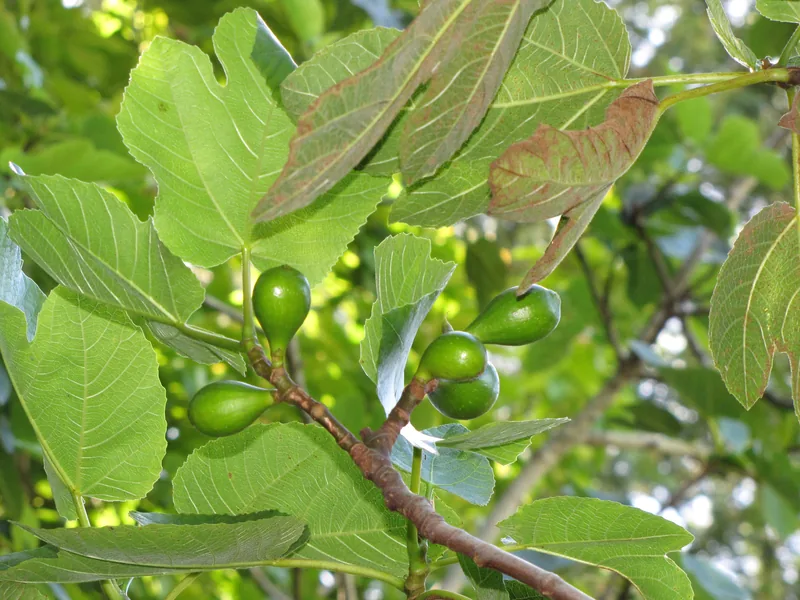
The official harvest story is the one UK gardeners most often need to hear twice. “In the cool UK climate, figs produce two crops a year, but only the first one usually ripens.” The first crop comes from “embryonic figs that start to form in late summer at the branch tips.” They “stay as pea-size fruitlets until spring, then start into growth and ripen over summer.” Those fruitlets, sitting at the shoot tips, “are prone to frost damage, so winter protection is beneficial.” [source] The second crop “forms on the current season’s shoots later in spring and early summer.” It “rarely [has] time to ripen outdoors.” The fruits “may reach a reasonable size, but will remain hard and green, so any that are larger than a pea are best removed at the end of summer.” [source] In a greenhouse kept all year, “both crops may ripen in a good summer.” [source]
For the best crop, the RHS says, “train your fig tree as a fan against a warm sunny wall and prune twice a year (in spring and early summer) to control the plant’s size and encourage fruiting.” A fan can be “kept to about 1.8m (6ft) tall and 3.5m (11½ft) wide,” or grown bigger if you have the space. In colder places, the same fan can be trained in a greenhouse, “with the horizontal wires positioned 30cm (1ft) away from the glass.” “Pinching out shoot tips is a key part of summer fig pruning.” [source]
Which variety? “The best known and most widely available is ‘Brown Turkey’,” with an Award of Garden Merit. The recommended list also names LITTLE MISS FIGGY 'Lmf01', “a compact variety, ideal for containers,” with “sweet, burgundy-coloured figs,” and ‘White Marseilles’, “hardy and reliable with large, sweet, pale green figs.” [source] Those official UK names sit beside, and are not replaced by, the longer California Common-type list on the types page. The fruits themselves, on this RHS page, “develop without fertilisation (parthenocarpic fruit), so pollination” is not needed. [source] That is why a UK gardener can grow a good fig without ever meeting Blastophaga psenes, and why the wasp desk still keeps Kew’s official flower story in the next room.
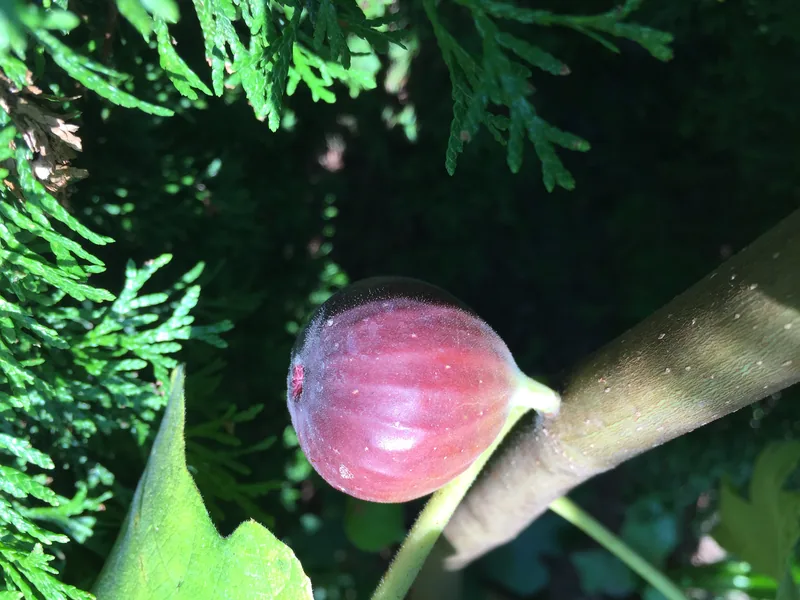
If you are reading this from a warmer county than the RHS is writing for, the San Luis Obispo page has its own official climate notes: figs “require prolonged summer heat,” may be 10–30 feet tall and wide, and, on the coast, may be happier beside “a south-facing, light-colored wall.” White Genoa, on that page, is “a good choice for cool coastal climates with fruit ripening through fall.” [source] Those are California sentences, labelled as such. This growing page stays, first, with the RHS.
Enjoyed this desk of official figs, wasps, and four horticultural types?
No pop-ups. No intrusive advertising. Just interesting stuff. A little support helps the next fruits.im site get built.