For families
A fruit that hides its flowers, and a wasp with a very small door
This desk is written so a curious household can enjoy official wording without being told that every garden must keep a wasp, or that every fig is a simple fruit.
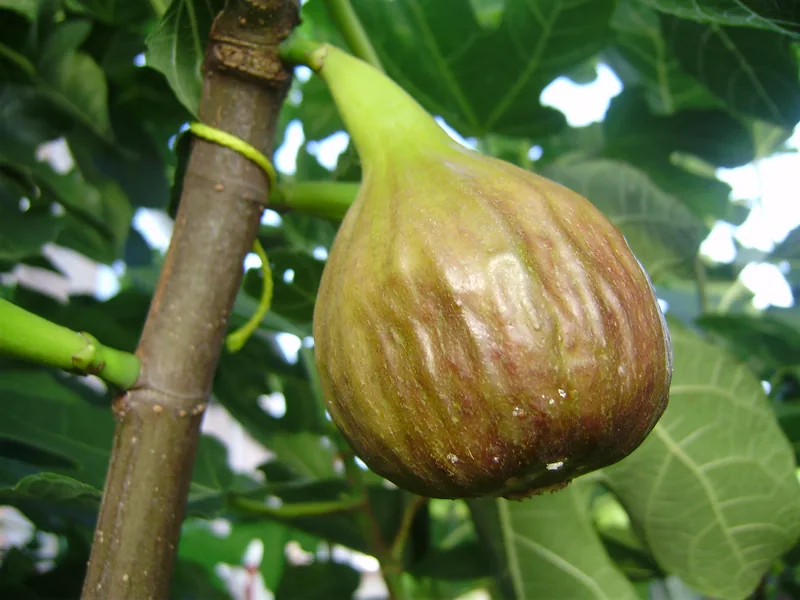
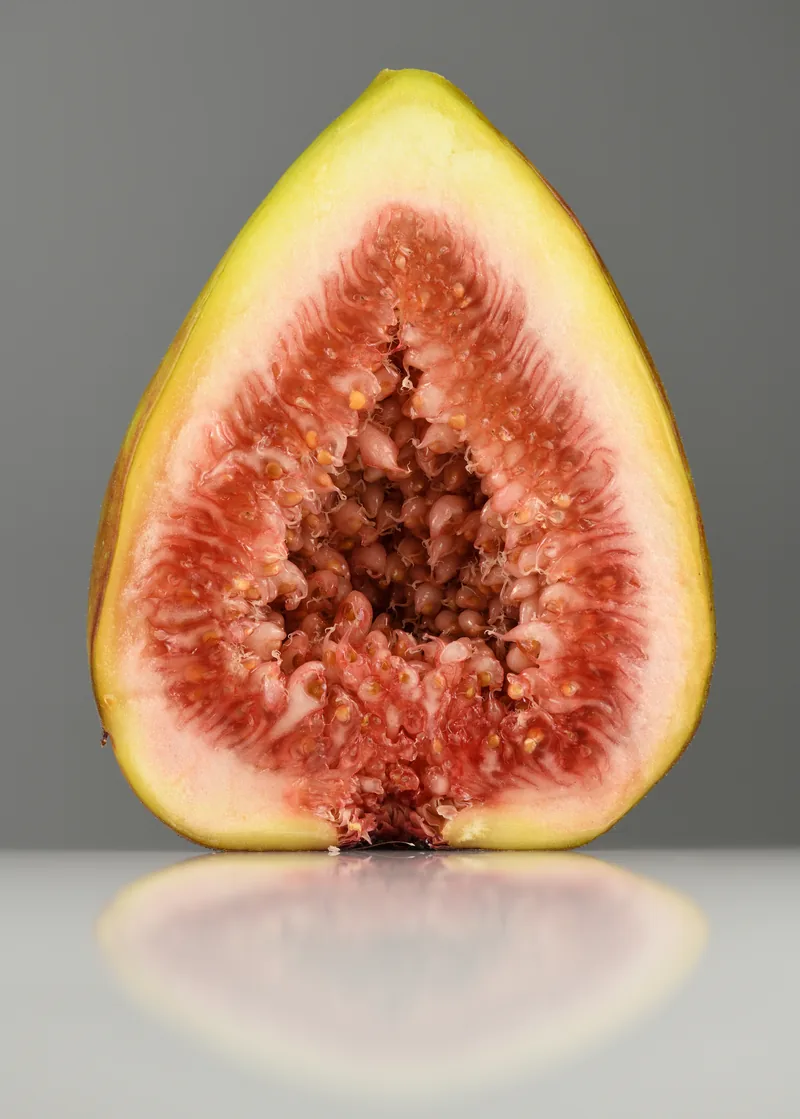
A good first look is the leaf: “around 20 cm long and 14 cm wide, with 3 to 5 deep lobes and rough to the touch.” [source] A good second look is a halved fig, if you have Ivar Leidus’s photograph or a ripe fig of your own on a plate. Inside, Kew says, are “numerous one-seeded fruits” in a mature syconium. [source] The flowers were already in there, very small, in a hollow receptacle. That is a nicer surprise than a lecture.
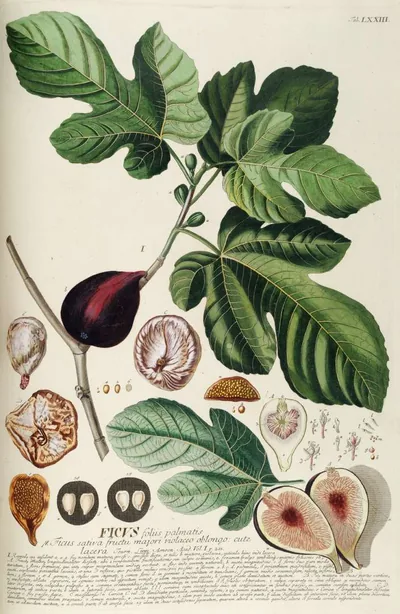
The wasp story can wait until someone asks. Kew’s official door is “a small opening at the apex.” The wasp’s official name, on that page, is Blastophaga psenes. [source] If you then walk into a UK garden, you can say, just as officially, that many garden figs set seedless fruit without that visit. [source] Children do not need a blended story. They can hold two official answers at once.
One official caution is for the grown-ups. Fig sap, Kew says, “can cause a skin inflammation if exposed to sunlight.” [source] This site is not a medical guide, and it is not a dare. The typographic fact sheets have no photographs inside, and the quiz is about official wording, not about eating a fig faster than anyone else.
Enjoyed this desk of official figs, wasps, and four horticultural types?
No pop-ups. No intrusive advertising. Just interesting stuff. A little support helps the next fruits.im site get built.