Home · What’s inside
Flowers, in a hollow receptacle
What’s inside a fig
Cut a ripe fig and you are not looking at a single seed-box. You are looking, in official wording, at many small flowers that have already done their work inside a hollow receptacle.
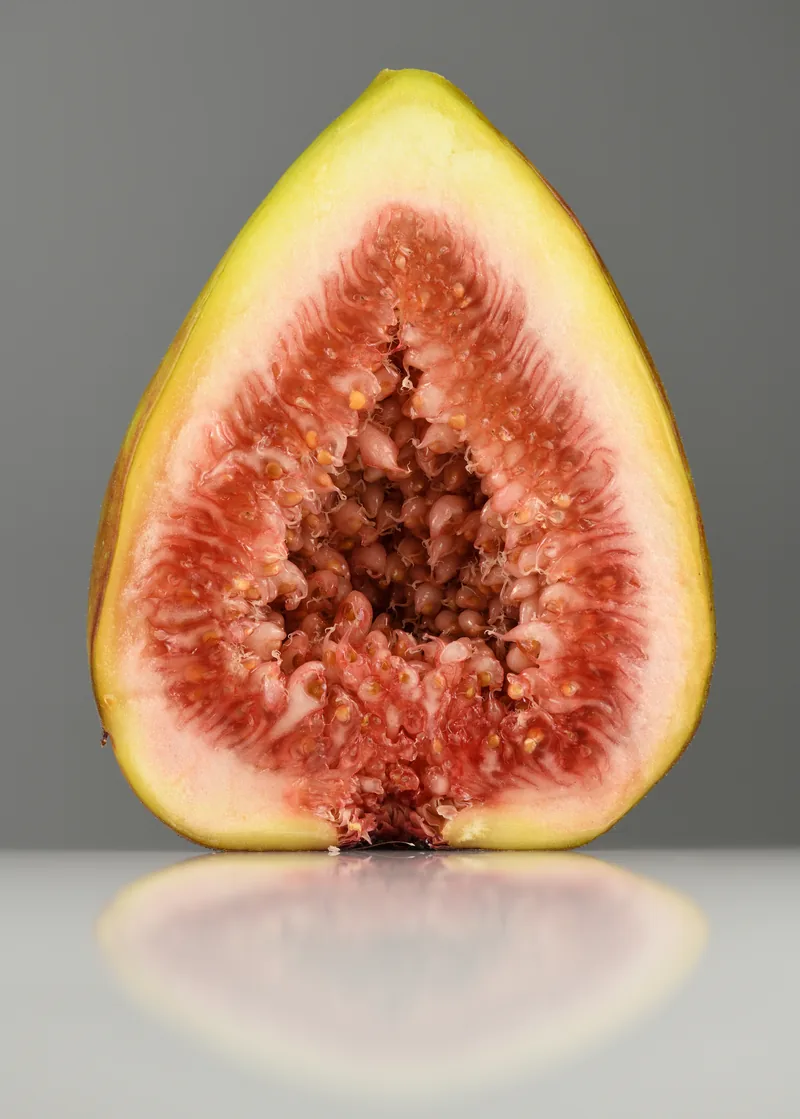
Kew’s sentence is the one this desk keeps at the centre. “The flowers are very small and contained in a hollow fleshy receptacle that resembles an unripe fig called the synconium.” Later in the same paragraph, “the edible fruit consists of the mature syconium containing numerous one-seeded fruits.” [source] The spelling changes on the official page, from synconium to syconium, without any announcement that a different organ is being named. On the field notes this site simply records both spellings. Mature figs, Kew adds, “are 3 to 5 cm in diameter, with a green skin, ripening to purple or brown.” [source]
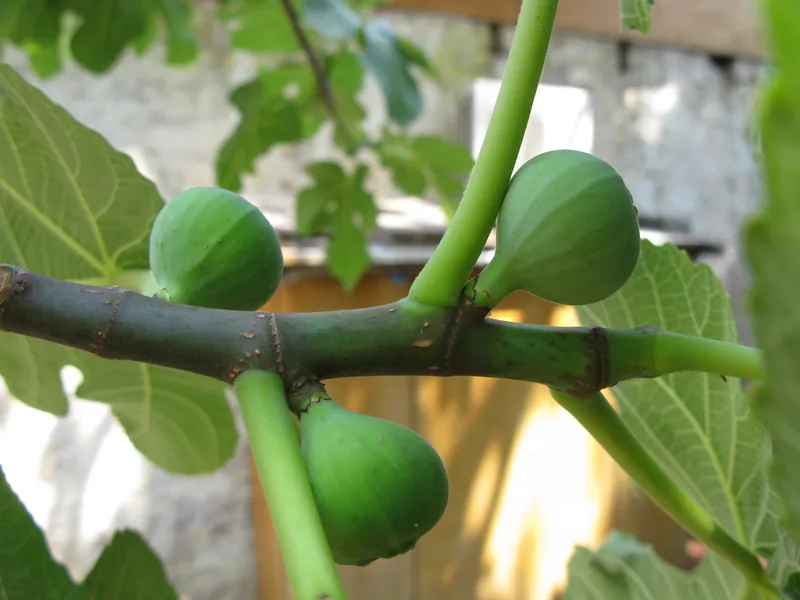
UC Master Gardeners of San Luis Obispo County choose a sterner official wording. “Figs are not technically fruit but are flask-shaped modified stems encasing numerous tiny flowers.” [source] Kew, on the same subject, is happy to call the mature syconium the edible fruit. [source] Those two ways of speaking are both right on their own pages, and they are not flattened here into one classroom definition. A 2026 UCCE talk by Phoebe Gordon adds another official name for the little hard pieces that meet the teeth: “The hard ‘seeds’ in figs are actually the fruit – druplets.” [UCCE 2026]
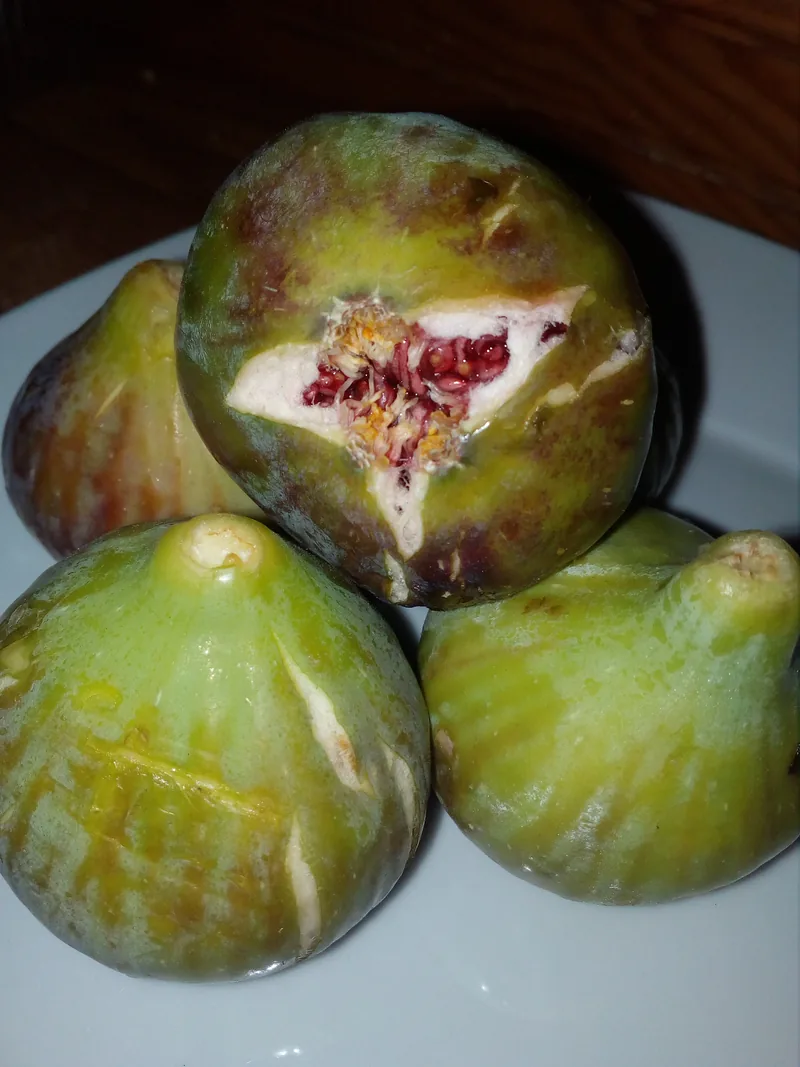
The leaf that shades all of this has its own official measurements on Kew’s page: “around 20 cm long and 14 cm wide, with 3 to 5 deep lobes and rough to the touch.” [source] Alvesgaspar’s later photograph shows those lobes beside still-immature fruits. Gordon’s talk says the syconium is “produced at leaf axils as the branch grows,” and that a tree “can have fruit at all stages of maturity at a single point in time.” [UCCE 2026] That is why a single photograph can look both ripe and unripe, and why this site captions unripe stills as unripe.
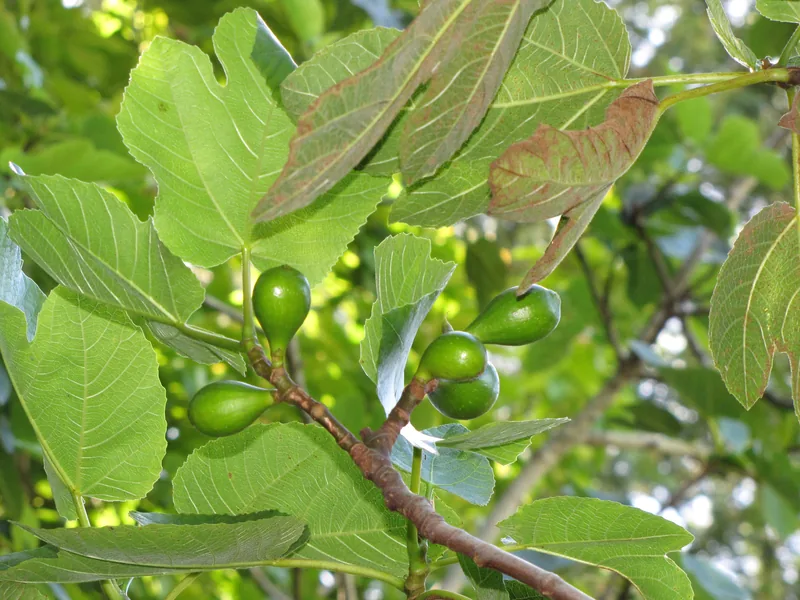
The Starr photograph from Shibuya Farm, Kula, Maui, is one of those unripe stills: green figs and leaves, 31 March 2011. It is a good picture of the plant, and it is not a picture of a mature syconium. If you want the pollination story that can fill that hollow receptacle, the wasp desk is next door. If you want the type of tree that may not need a wasp at all, the four types are the official list to keep open.
Enjoyed this desk of official figs, wasps, and four horticultural types?
No pop-ups. No intrusive advertising. Just interesting stuff. A little support helps the next fruits.im site get built.